



























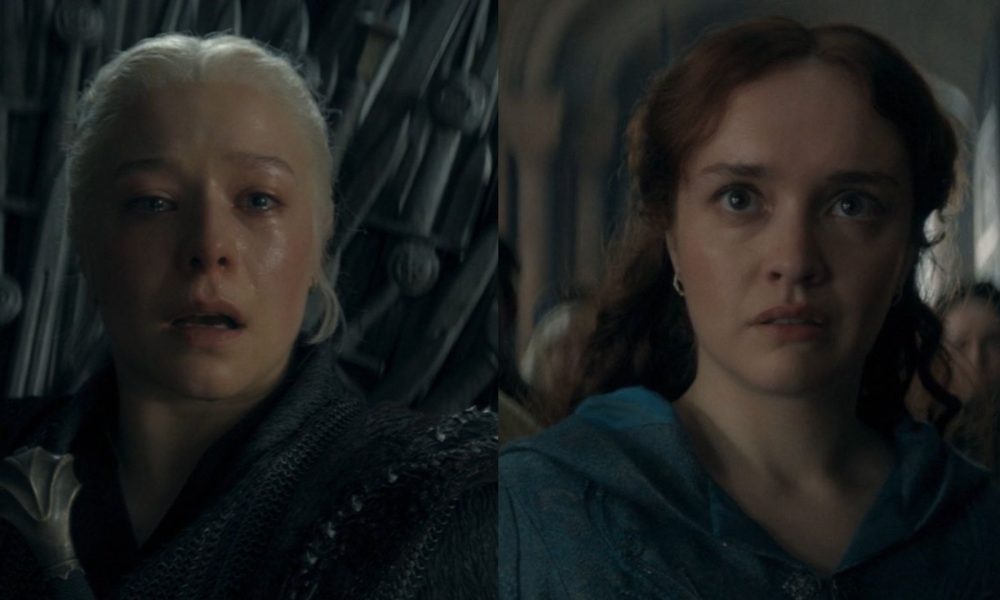
In the powerful ending scene from House of the Dragon Season 3 Episode 2, Rhaenyra Targaryen walks to the Iron Throne after the brutal execution of Otto Hightower, only to lock eyes with Alicent Hightower.
Emma D’Arcy, who plays Rhaenyra, in an interview with TV Insider has shared deep insight into the emotional layers of this moment, revealing how the directors and themselves wanted to strip Rhaenyra of her adulthood and highlight the childhood bond between the two women.
Quick read:
- Emma D’Arcy added layers of emotions in her ascension to the throne
- She becomes a child on the throne when she sees Alicent
- The death of Otto brings out emotions between the two women
Rhaenyra’s regression in the throne room
D’Arcy explained that the scene was crafted to show Rhaenyra regressing under pressure.
“I wanted Rhaenyra to be stripped of her adulthood by the time she reaches the throne, She finds herself in this position where she’s required to execute her father’s former best friend.” they said.
Add WoT as a preferred source on Google.
After ordering the execution of Otto Hightower her father’s former Hand and Alicent’s father, Rhaenyra finds herself in an overwhelming position. The weight of leadership, combined with personal history, makes it hard for her to maintain her adult composure. The throne room becomes a place where time collapses.
alicent seeing rhaenyra on the iron throne after otto was beheaded 🚬 pic.twitter.com/iNoRXoLk59
— ؘ (@rhaenyrarchives) June 29, 2026
Seeing Alicent forces Rhaenyra to confront their shared past.
“When someone has known you from your childhood, I think it’s very hard to retain the jacket of your adult self.” D’Arcy noted.
In that glance, the two former best friends are once again the girls who grew up together in the Red Keep.
The symbolism of childhood and the court
D’Arcy emphasized how the setting amplifies the emotion.
“This is also the court in which they grew up and the whole timeline is kind of laid bare between them in that look.”
The throne room, filled with memories of their youth, makes the moment profoundly intimate and painful. What should be a triumphant claim to power instead feels layered with nostalgia, regret, and unresolved love. This directorial choice adds depth to Rhaenyra’s character. Even as she seizes the throne, she is reminded of her humanity and the personal cost of the war.
The scene beautifully captures the central tragedy of the Dance of the Dragons: two women who once loved each other are now on opposite sides of a devastating conflict.