


















A decade ago, Game of Thrones stood as television’s iron crown, but the seed of its downfall was quietly sown in Season 5. When HBO replaced Jeyne Poole’s grim Winterfell arc with Sansa Stark’s, the narrative veered off George R.R. Martin’s intended course. That one shift meant to tighten the plot and elevate tension; instead, it fractured the story’s internal logic.
Season 5 marked the first time the show truly outpaced its literary source and the first time Martin’s guiding hand faded from the adaptation. As the butterfly wings of change began to stir, the series’ intricate political chessboard lost its balance. What began as a creative compromise soon became a cautionary tale in storytelling. Game of Thrones’ fifth season was the turning point where artistic ambition collided with creative overreach.
Quick Read:
- Game of Thrones Season 5 marked a turning point in HBO’s adaptation of George R.R. Martin’s novels.
- The show replaced Jeyne Poole’s Winterfell arc with Sansa Stark’s storyline.
- This was the first major deviation from Martin’s A Song of Ice and Fire.
How Game of Thrones Season 5’s Biggest Change Altered the Story Forever
Game Of Thrones | Credit: HBO
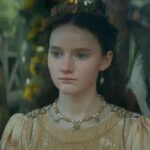
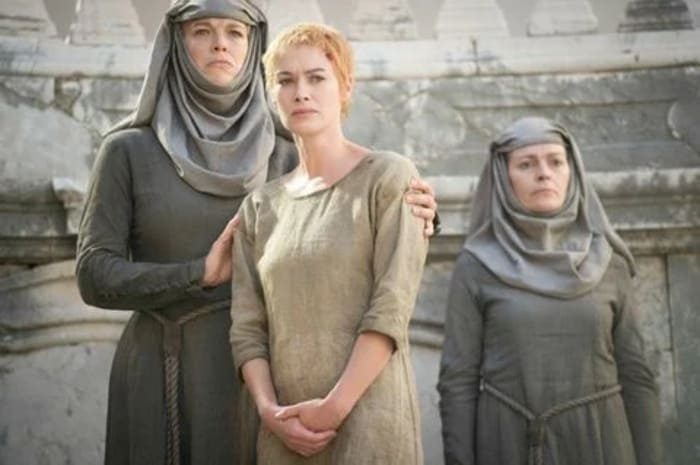
In A Song of Ice and Fire, Sansa Stark never sets foot in Winterfell after fleeing King’s Landing. She remains in the Vale, caught in Littlefinger’s manipulative web, while her childhood friend Jeyne Poole is forced to impersonate Arya Stark and marry Ramsay Bolton. But in HBO’s Game of Thrones Season 5, that identity was rewritten, Jeyne vanished, and Sansa took her place.
This was no minor creative tweak; it shifted the show’s moral and emotional compass. Suddenly, a major character endured unspeakable horrors intended for a minor one, turning personal trauma into spectacle. It also disrupted the layered politics Martin had crafted. Jon Snow’s decision to march on Winterfell lost its tragic irony, since in the books, his rescue attempt is based on a false assumption. Likewise, Littlefinger’s intricate schemes in the Vale were reduced to convenient plot devices, stripping him of his Machiavellian edge.
The choice made dramatic sense for television but demolished narrative coherence. By merging storylines to simplify the sprawling cast, the writers accidentally removed key pieces of Martin’s chessboard. What could have been a haunting study of identity and deception became a brutal shortcut. With one pen stroke, the adaptation traded depth for immediacy, and Westeros was never the same again.
George R.R. Martin’s “Butterfly Effect” Warning That HBO Ignored
George R.R. Martin had long cautioned against careless adaptation, invoking what he called the “butterfly effect” of storytelling. On his blog, he drew parallels to Ray Bradbury’s A Sound of Thunder, where a single crushed butterfly changes the entire course of history. “Change begets change,” Martin warned in a since-deleted post on his blog, lamenting that even the smallest deviation could ripple disastrously through the narrative timeline.
By the time Game of Thrones reached Season 5, those ripples had become waves. Martin’s limited involvement — “By Season 5 and 6, and certainly 7 and 8, I was pretty much out of the loop,” he admitted in an interview with The New York Times– left the showrunners steering blind without their original compass. Soon, the intricate moral ambiguities and political intricacies gave way to rushed storytelling and spectacle-driven scenes.
The author’s frustration wasn’t unique to Thrones. In a separate blog post, he once wrote that Hollywood often insists on ‘improving’ great works, noting:
No matter how great the book, there always seems to be someone who thinks he can do better. They never make it better, though. Nine hundred ninety-nine times out of a thousand, they make it worse.
His words echo across modern adaptations, The Witcher, The Wheel of Time, and even The Rings of Power, where creative liberties often erode the essence of the source. Martin’s butterfly didn’t merely flap; it tore through the heart of Westeros. Season 5 was the turning point, the moment HBO’s Game of Thrones shifted from George R.R. Martin’s political tragedy to a simplified fantasy drama.
The Sansa Stark substitution was the quiet storm that foretold the finale’s collapse, proof that even one “small” choice can bend an entire story’s destiny. Game of Thrones and House of the Dragon are available on HBO Max.
Also Read: How House of the Dragon Season 3 Can Nail This Character’s Death and Save the Show
![Game of Thrones: House of the Dragon [Season 2]: Inside the Dawn of the Targaryen Civil War](https://bendthekneegot.com/wp-content/uploads/2025/03/house-of-the-dragon-showrunner-teases-new-major-characters-in-season-3.jpg)
If you have any important filming news about House of the Dragon, or if you want to collaborate with us or want to write for us, please drop us a message here.