



















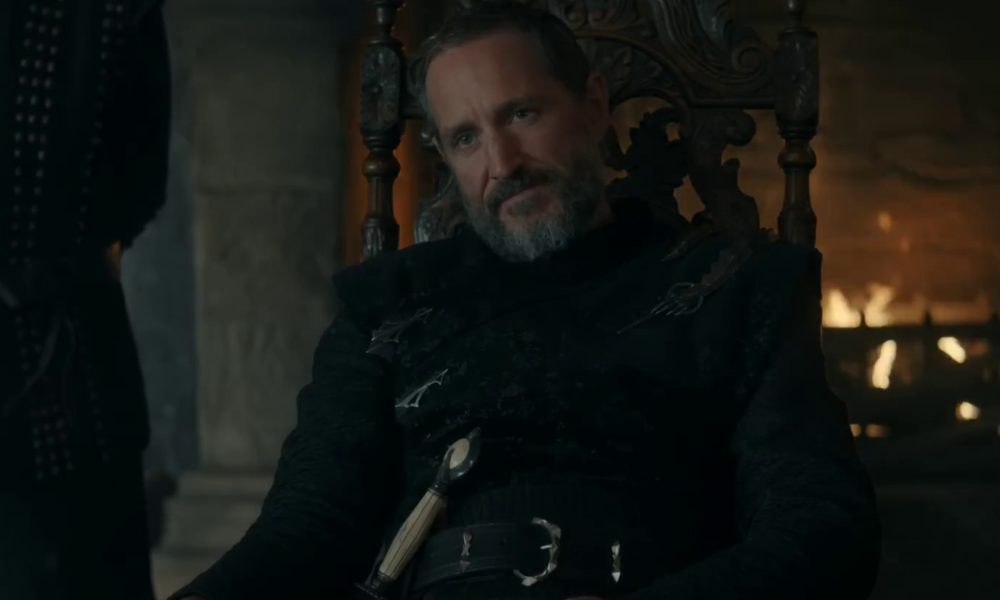
Episode 4 of A Knight of the Seven Kingdoms ends with one of the series’ most powerful and unexpected moments as Prince Baelor Targaryen steps forward to fight beside Ser Duncan the Tall in the Trial of Seven. For Dunk, it’s a stunning show of support. For Baelor, it’s a choice that puts him directly against his own family. According to showrunner Ira Parker, that tension is exactly what makes the moment so meaningful.
Quick read:
• Ira Parker explains Baelor Targaryen’s morals behind taking Dunk’s side.
• Not backing Dunk would have meant betraying his values as a knight.
• Ira Parker compares Trial of Seven to the Battle of Redgrass.
Speaking about the scene in a recent GQ interview, Parker explains that Baelor’s decision doesn’t come easily. Throughout the episode, he is caught between two truths he can’t ignore. He knows exactly who Aerion Targaryen is, and he understands that Aerion deserved to be struck for his cruelty. At the same time, choosing Dunk’s side means openly opposing his brother and the powerful House Targaryen, which would prove to be a dangerous move for himself as the heir to the Iron Throne.
Prince Baelor’s decision is a test of the moral labels he carries
For Baelor, this is not just a political dilemma but is a deeply personal reckoning. Parker notes that Baelor has spent much of his life being praised as the perfect prince: honorable, just, and destined to be a great king. But until that moment, those labels have never truly been tested. The Trial of Seven forces Baelor to ask himself whether he truly lives up to the reputation others have given him.
“This man protected the innocent.
As every true knight must.
Let the gods decide if he was right or wrong”Crown prince baelor breakspear entrance with game of thrones main ost
I’m bawling my eyes out
😭😭😭😭😭😭😭 pic.twitter.com/MVf9ZPd3HD— . (@thyciturn) February 6, 2026
Parker frames this moment around a simple but powerful idea saying, “virtue untested means no virtue at all.” No one demands that Baelor step forward. No law, oath, or expectation forces his hand. Instead, the pressure comes from within. He realizes that if he does nothing, Dunk, a man who acted purely to protect the innocent will almost certainly be killed. He understands that standing aside would mean betraying the values he claims to represent.
The showrunner also contrasts this choice with Baelor’s earlier heroics. Baelor Targaryen is widely admired for his role in the Battle of Redgrass, but Parker points out that those circumstances left him with no real moral choice. The enemy was already at the gates of King’s Landing; defending the realm was necessary, not optional. It was brave, but it wasn’t a test of conscience.
The Trial of Seven is different. By choosing to fight alongside Dunk, Baelor proves that his honor isn’t just a reputation; it’s something he’s willing to act on, even when it means standing against his own blood.
In Parker’s view, Baelor’s choice defines him. It shows that he isn’t honorable only when it’s easy or expected. He’s honorable when it’s difficult, dangerous, and deeply uncomfortable. In that final act, Baelor becomes exactly the kind of prince and man that people have always believed him to be and the character he is represented as in the books.
If you have any important filming news about House of the Dragon, or if you want to collaborate with us or want to write for us, please drop us a message here.