


























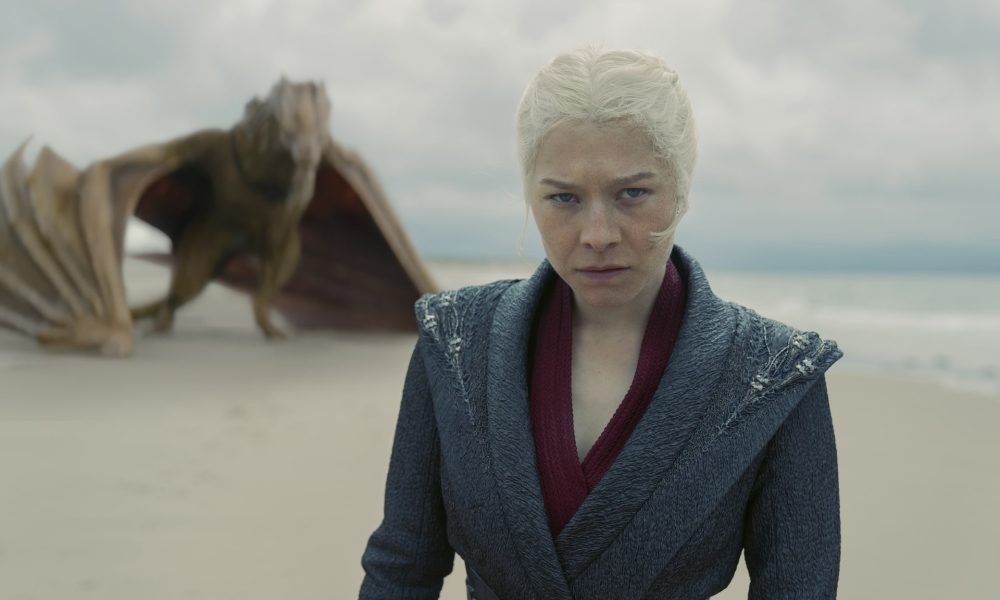
In House of the Dragon, a key emotional sequence between Rhaenyra Targaryen and Daemon Targaryen gained renewed attention after director Clare Kilner credited Emma D’Arcy for shaping its creative direction. The moment, centered on grief and emotional withdrawal, was influenced by D’Arcy’s suggestion to weave in a fairytale-inspired tone that reframed Rhaenyra’s psychological state during the scene.
This interpretive choice introduced a softer, dreamlike emotional register within an otherwise intense narrative environment, adding depth to the portrayal of sorrow and the connection between the characters. Kilner highlighted this contribution while discussing the making of the sequence and its emotional intent.
Quick Read:
- Emma D’Arcy influenced a key emotional scene in House of the Dragon Season 3.
- Director Clare Kilner credited D’Arcy for shaping Rhaenyra’s grieving sequence.
- The scene focuses on Rhaenyra Targaryen and Daemon Targaryen.
Emma D’Arcy’s idea behind the emotional sequence
Credit: HBO
HOTD director Kilner revealed that Emma D’Arcy suggested merging fairytale element into Rhaenyra’s grieving scene with Daemon:
Add WoT as a preferred source on Google.
“It was Emma’s (idea) and it’s intelligence choice. It felt like fantasy piece, a sort-of Sleeping Beauty, that feeling when you are in deep grief all you want to do is sleep… Daemon comes in and whispers these words to her, that wakes her up.”
The creative decision introduced a layered emotional structure to Rhaenyra’s grieving moment in Season 3, Episode 2, positioning her experience of sorrow within a suspended psychological state rather than a direct dramatic reaction. The fairytale-inspired framing allowed the scene to reflect emotional exhaustion in a more internalized form, where grief manifests as stillness and disconnection.
Does this collaborative layering deepen audience connection, or should emotional framing remain tightly controlled by direction alone?
Also Read: Game of Thrones actor Pilou Asbæk (Euron Greyjoy) joins Apple TV’s biggest sci-fi franchise