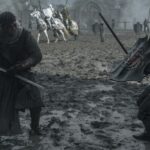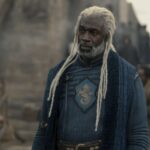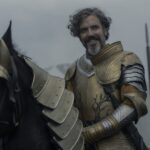
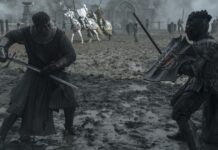

















Season 2 of A Knight of the Seven Kingdoms pushed the production team to its limits. The showrunner revealed that while Season 1 already felt like an indie project in terms of speed and scale, the second season was exponentially more demanding. With the story moving into a drought setting, the crew had to battle extreme weather conditions, making the process “10 times harder” than before.
Quick read
- Season 1 felt like an indie shoot.
- Speed and constant movement made it tough.
- Season 2 was “10 times harder.”
Season 1’s indie‑style difficulties
The showrunner recalled how the first season felt stripped down compared to Game of Thrones. He told THR:
“Season one was so hard. So totally hard. The speed at which we had to shoot these things and how quickly we had to move around. It felt more like an indie film, or even a student film, than it did a Game of Thrones production.”
But Season 2 raised the stakes even further:
“Then came season two, and it is somehow 10 times harder. This has been a brutal, brutal season. The biggest part has been this weather. We had to go somewhere for some heat and dryness because Book Two takes place in a drought.”
The drought setting required filming in harsher climates, forcing the crew to adapt to extreme conditions while maintaining the quality expected of a Westeros story.
HBO
Add WoT as a preferred source on Google.
Storm of the decade made filming worse
Adding to the difficulty, production in Gran Canaria was struck by Storm Therese, described as the “storm of the decade.” The storm dumped 420mm of rain in 24 hours, causing landslides, flooding, and blackouts. Winds reached 90–100 km/h, waves rose to six meters, and reservoirs overflowed. Infrastructure collapsed, roads were closed, tunnels blocked, and thousands lost power.
Just days later, a Saharan dust storm (calima) hit the island, reducing visibility, disrupting flights, and coating the set in dust. Instead of the heat and dryness needed for the drought setting, the crew faced floods, dust, and chaos, making Season 2 uniquely punishing.