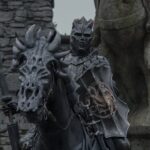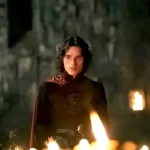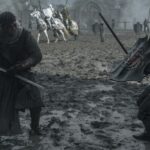
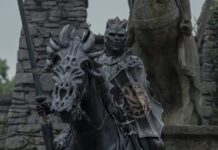





















In A Knight of the Seven Kingdoms, few moments hit as hard as Prince Baelor Targaryen’s brutal, skull-crushing death during the Trial of Seven. The scene is emotionally devastating for all the fans of the show. Actor Bertie Carvel, who brought Baelor to life, recently opened up about filming that shocking sequence in an interview with Decider. His reflections go beyond the blood and practical effects, touching on why death scenes hold such unique power for actors.
Quick read:
- Bertie Carvel reveals he likes doing death scenes
- He explains how it has a deeper meaning to it
- He links death scenes to audiences’ imaginative power
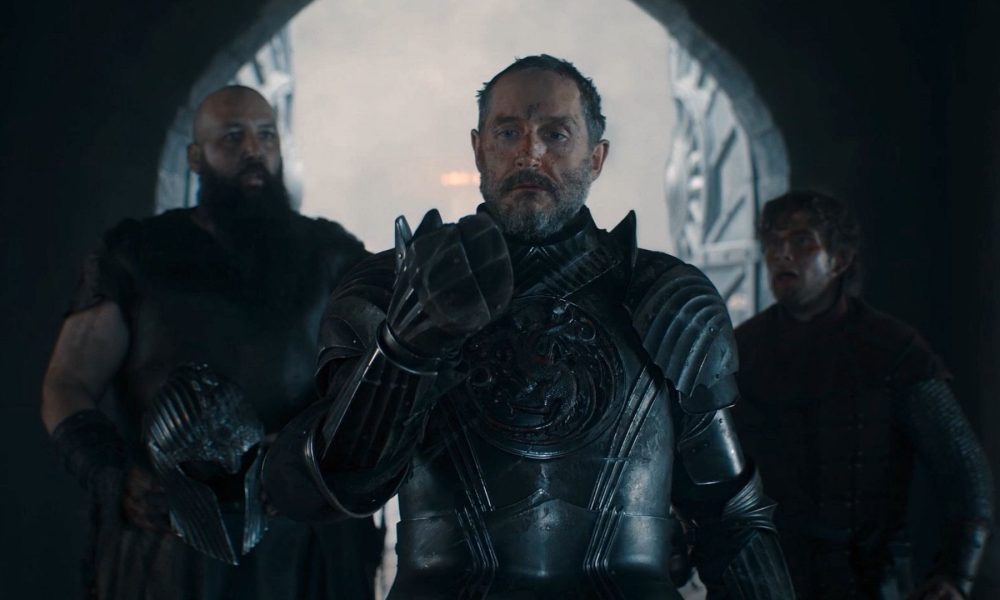
Ser Duncan and Prince Baelor in A Knight of the Seven Kingdoms (Image: HBO)
The appeal of death scenes
When the host described the scene as “harrowing and cool and gnarly in different ways” and asked what it was like to shoot such a moment on camera, Bertie’s response was immediate and enthusiastic:
“It was great. Death scenes are great. There’s no hiding from the fact.”
He went on to explain a deeper truth many actors might quietly feel:
“Most actors are terrified of people finding out that you’re not who you say you are, which is ridiculous because by its very nature that’s what you’re doing. So I find death scenes are great because it’s very obviously acting. And we still, if it’s any good, believe it. And that’s the crux of it.”
In other words, dying on screen strips away pretense in the most literal way. Even though everyone knows it’s fake, yet the best performances still make the audience feel the loss. That paradox, Bertie argues, is what makes these moments so rewarding.
The power of imagination
Bertie’s answer takes an almost philosophical turn as he reflects on the role imagination plays in acting.
“People’s imaginations are as true I think. I live in my imagination. I live as fully in my imagination as my flesh. And it can do things and it can have a bearing on the world that is powerful and truthful even though it’s just make-believe. And somehow pretending to die is a quite profound thing to do.”
This perspective explains why Baelor’s death lands so heavily. The physical horror of Baelor collapsing is one thing. But the emotional weight comes from how convincingly Bertie sells the finality. It’s make-believe, yet it carries real grief because the audience’s imagination fills in the rest.