





















Image: Game of Thrones/HBO
People complained a lot about the final season of Game of Thrones, not just millions of sometimes bitterly angry fans but also quite a few critics. In recent memory, only with Star Wars: The Last Jedi have so many long-loyal fans of a major global pop-culture phenomenon so passionately, collectively, and frequently expressed such high levels of disappointment (or worse) in the outcome of a beloved franchise (to be fair to the justly maligned films of The Hobbit Trilogy, I think people—including the director, Peter Jackson—knew that it was never going to equal the magisterial Lord of the Rings Trilogy, so I am not counting that).
We only recently found out from one reputable survey that just 52% of fans had positive feelings regarding this final season, and talk of the series being “ruined,” “falling apart,” “massacred,” “devoid of logic,” or being a “trainwreck” this final season was hardly uncommon, with one review even calling it the “worst series finale of all time.”
And yet, this final season did take home the Emmy Award for Outstanding Drama Series…
Here, I’d like to tackle some of the criticisms of the show, and argue that some of the things people are accusing it of are what make it true to life.
Planning for the worst? Or the worst planning… Image: HBO/Game of Thrones
I. Common criticism of an uncommon show
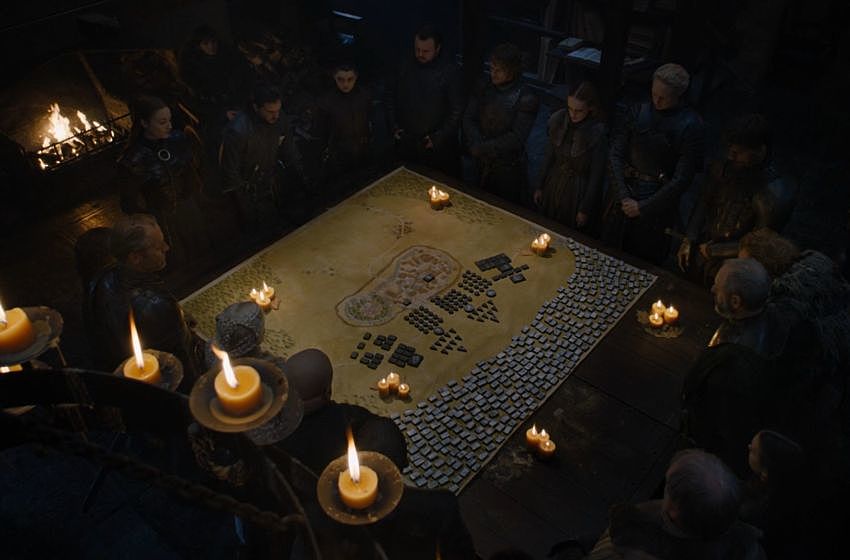
Many of the criticisms of Game of Thrones‘s final season’s plot centered centered on pacing, writing, and tactical and strategic plot issues (notice I am not talking about a Starbucks cup).
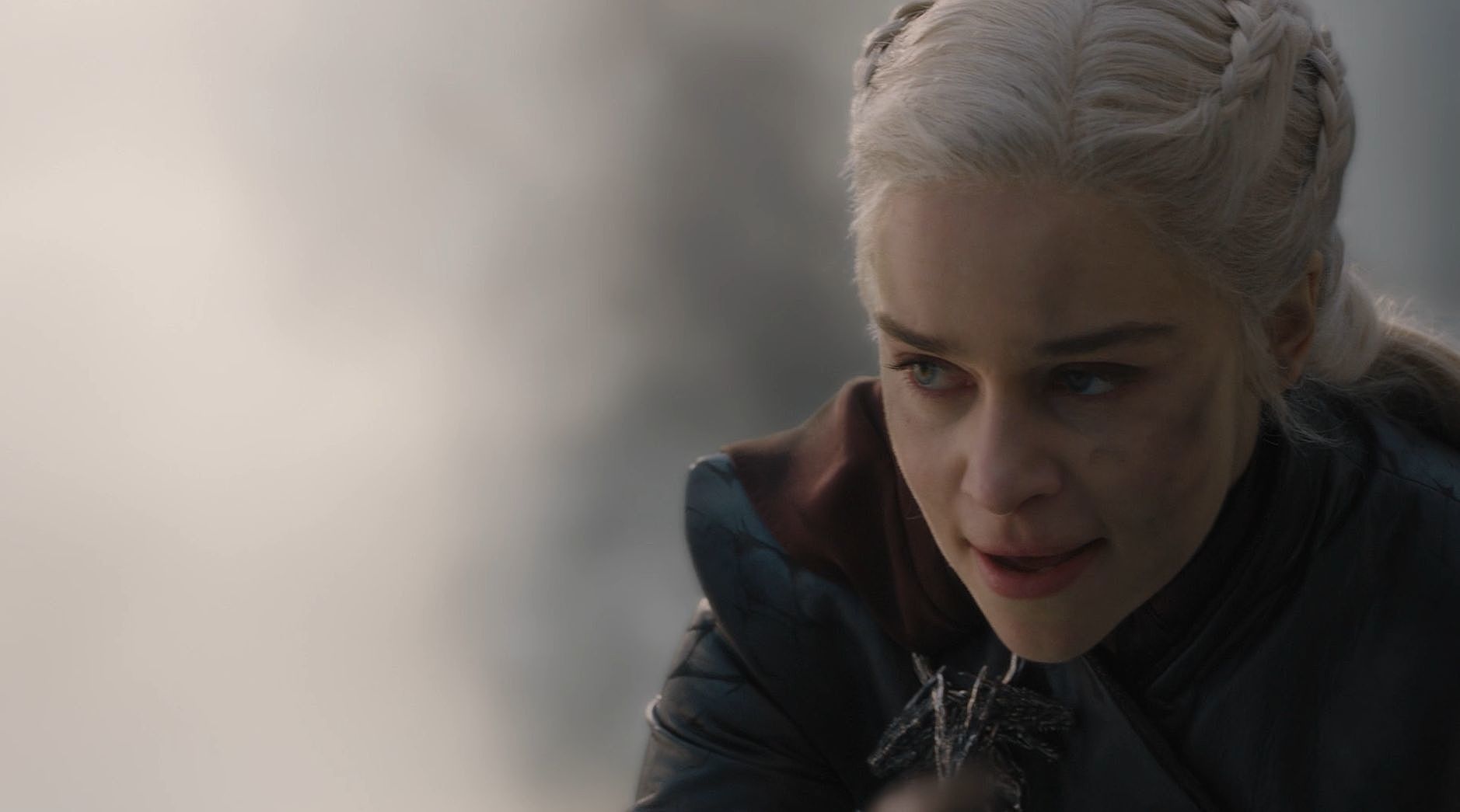
I agree that pacing was a huge issue, particularly with the final episode, where the climax involved the death of Daenerys Targaryen, a major character we’ve followed from the show’s first episode. That should have happened at the end of an episode, not in the middle and swiftly put aside. This death at the hands of Jon Snow was already going to be hard for many fans to accept, but it was made so much harder by the rapid, almost casual way it and the aftermath were handled.
This was probably the most blatant example of a pacing issue from the season, but it is just one of many pacing issues—both big and small—that combined to make their collective destructive effect as devastating to the season (and possibly the series as a whole?) as a dragon on a Westeros battlefield.
The writing, too, became a huge issue (admittedly intertwined with pacing), with so much of the season being devoted the battles and spectacle and so little to dialogue or buildup. Dialogue had distinguished Game of Thrones as much as the slaughter, sex, and sudden plot twists. This eighth-season decline in writing was obvious to me at first viewing, but when you rewatch some of the earlier seasons’ episodes, the gap is far more obvious, so exemplary is the storytelling episode after episode in earlier seasons, so so-so and problematic in the last two, especially the final season. In particular, in the eyes on many, some key character moments and character development were not well-handled or flat-out mangled. Even season 7 has far more and far better exchanges; upon rewatch, the decline of season 8 relative to season 7 seems about as steep and dramatic as season 7 relative to the first six seasons (i.e., really steep and dramatic).
As for plot issues, some of the most valid plot-driven criticism often centered on “plot armor”, i.e., too many situations where too many main characters survived too many situations they almost certainly should not have (or, at the very least, fewer main characters should have survived). Viewers are left to lament the deaths of lesser characters while virtually all the main ones survive horrific slaughter, resulting in a far-reduced emotional impact in the most epic episodes when there should have been far more emotional climaxes; the real mourning is for non-tropey storytelling that has been replaced with tropey storytelling. This peaked for fans and critics during the Battle of Winterfell against the Night King and the Army of the Dead (to quote an MTV article’s subtitle, “Jon Snow’s plot armor is made of Valyrian steel,” with Arya Stark’s miraculous survival of the massacre at King’s Landing in “The Bells” a solid runner-up.
In our feedback-driven media culture, criticism seems so often to revolve around audience member selfishness: we grew up with Arya, remembering Arya Stark as a little girl, so we don’t like the idea of Arya having sex, her normal age-appropriate-in-the-final-seasons’ hormones and her own agency be damned. Thus, for many, Arya and Gendry getting intimate was mishandled at best or deeply controversial and inappropriate at worst.
In cheap and vapid television, characters exist to fulfill our whims. In more challenging, adult drama, the characters are so richly fleshed out that they really are their own people and don’t exist to satisfy a marketable demographic; for the latter, think Tony Soprano and the overall arc of Star Wars’ Anakin Skywalker (Clone Wars being included) compared to any the banal major characters of Paulo Coelho’s fiction or Rey of the newest Star Wars trilogy.
But I’m not writing this to tread in-depth over well-trodden ground; rather, it is most of the other plot complaints I found to be off. Way off.
In this article, I’m here to talk about how this final season of Game of Thrones actually brilliantly executed a display of the chaos of war and why much of the criticism about the eighth season related to its chaotic nature and dumb character choices miss the mark.