



























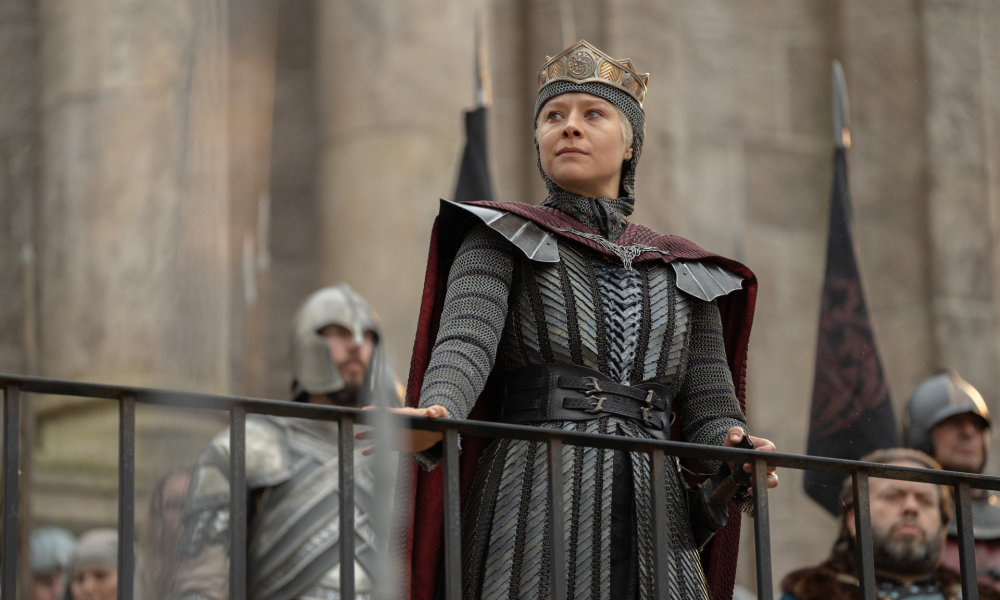
In the House of the Dragon Season 3 finale, Queen Rhaenyra Targaryen (Emma D’Arcy) stands before the people of King’s Landing and makes one of the boldest claims of her reign; declaring herself the “Prince That Was Promised.” The moment marked a dramatic shift in her character, moving her further from the hesitant, empathetic leader of earlier seasons into something far more absolute.
Emma D’Arcy has now broken down the deeper meaning behind that speech, revealing just how intentional and unsettling the transformation was meant to feel.
Quick read:
- Emma calls Rhaenyra’s Prince That Was Promised declaration as “selling a god” to the people
- She no longer wants to connect with the people on their level and views herself as greater than them
- She has descended into complete oppositional thinking
From “your problems are my problems” to oppositional thinking
Emma told The Wrap,
“If once she had been like the people’s leader and her energy had been about sort of sameness and ‘your problems are my problems,’ it’s now sort of totally oppositional thinking.”
Add WoT as a preferred source on Google.
Earlier in the series, Rhaenyra’s strength came from connection. She positioned herself as someone who understood the struggles of the smallfolk. By the end of Season 3, that approach has been completely abandoned. Instead of meeting the people on equal ground, she elevates herself above them.
“If your world is to survive, I must light the way. Because I am the Shield of your he People. I am Rhaenyra the Chosen. I am the Prince That Was Promised.” — Rhaenyra Targaryen #HouseOfTheDragon pic.twitter.com/0ABrQLNN0U
— westerosies (@westerosies) August 10, 2026
Selling a god
D’Arcy continued:
“The strangeness and the size of that declaration, even if it’s not totally understood, is about selling a god, selling a leader as god.”
The scale of the claim is deliberate. Rhaenyra is no longer simply asking for loyalty or support. She is demanding belief. By claiming the ancient prophecy as her own and presenting herself as the prophesied savior of Westeros, she constructs a new image; not just a queen, but a figure of myth and worship.
A complete shift in authority
This reframing turns the speech into more than political rhetoric. It becomes an act of self-mythologizing. Rhaenyra is actively “selling” the idea of her own divinity, forcing the people of King’s Landing to confront a version of their queen who no longer seeks to relate to them, but to rule them as something greater.
The choice reinforces the darker path she has taken throughout the season. Power, loss, and the weight of the Iron Throne have eroded the empathy that once defined her. What remains is a leader who sees oppositional thinking as strength and divine authority as the only way forward.
With the final season approaching, D’Arcy’s comments suggest that this new version of Rhaenyra, the one who sells herself as a god, will only grow more absolute as the Dance of the Dragons reaches its end.