
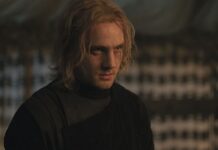
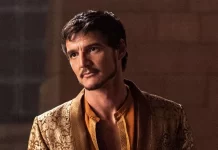









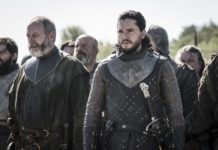













The fifth episode of A Knight of the Seven Kingdoms aired this Sunday and quickly became one of the highest-rated chapters of the season, earning an impressive 9.8/10 on IMDb. At the centre of the episode is the long-awaited trial of the seven – demanded by Aerion Targaryen in the previous episode – and the decisive confrontation between him and Dunk.
Unlike Game of Thrones, which often revolved around grand political manoeuvring and large-scale warfare, A Knight of the Seven Kingdoms keeps its storytelling intimate and character-driven. The trial of the seven reflects that approach. It is less about spectacle and more about honour, identity, and survival.
Trial of the seven and intelligent sound design
While the battle is visually striking, what truly sets it apart is the sound design. The franchise has delivered unforgettable combat sequences in the past – from sprawling war epics to chaotic skirmishes – but this episode chooses a different path. Instead of amplifying every clash of steel, it narrows the audience’s focus.
As Dunk and Aerion Targaryen face off, the sound begins to fade. The noise of the crowd and the chaos of battle give way to something far more personal and disorienting.
Speaking on the official Game of Thrones podcast, director Owen Harris explained that this was intentional. The sound design was crafted to replicate the “ringing sensation” of Dunk’s concussion, placing viewers directly inside his perspective. In his own words:
“It is that ringing sensation where everything goes a bit foggy. So it was about playing around with space, really, and where Dunk was in terms of space, and how everything… in those moments, things start to close in around you. And all you’re sort of left with is your breath. And you can maybe just about feel the thumping of your heart, and sort of everything starts to shut down.”
By muting the surrounding chaos, the scene becomes intensely subjective. The audience doesn’t just watch Dunk fighting Aerion Targaryen – they experience his dizziness, his isolation, and the physical toll of the duel.
Why sound design matters in the franchise
Adapting the A Song of Ice and Fire universe for television has never been simple. The original Game of Thrones famously reworked its pilot to get the tone right. Since then, creative choices – especially in sound – have played a defining role in shaping the world. From the chilling silence that precedes danger to the subtle echoes of memory and trauma, sound has always been central to Westerosi storytelling. It is not merely background – it deepens emotion and heightens immersion.
That is why the muted final moments of the trial feel so powerful. When Aerion Targaryen finally yields, the visual and sound choices make the humiliation heavier. The victory belongs to Dunk, but the moment belongs to perspective.
In the end, the barely audible fight isn’t a technical omission – it’s a storytelling choice. By letting the noise fade, the series reminds us that this duel between Aerion Targaryen and Dunk was never about spectacle. It was about a man proving himself in the only way that mattered.